Our vision on
Successful greening for a healthy environment
The need to add more green spaces is widely felt. With the European Nature Restoration Regulation, greening is no longer optional. It is a joint task. However, municipalities and provinces face major challenges in built-up areas, where green spaces often have to compete with other demands on space. At &flux, we are happy to help governments and partners give greenery a fully-fledged position in the spatial planning process.
GIOS and green standards
As co-authors of the Green in and around the City Guide (GIOS), we help municipalities link greening to the different scales of the city, from street to region. We translate ambitions for greening and climate adaptation into concrete requirements in projects and support the implementation of GIOS green standards. In this way, greenery is given a permanent place in planning instead of being an additional space claim.
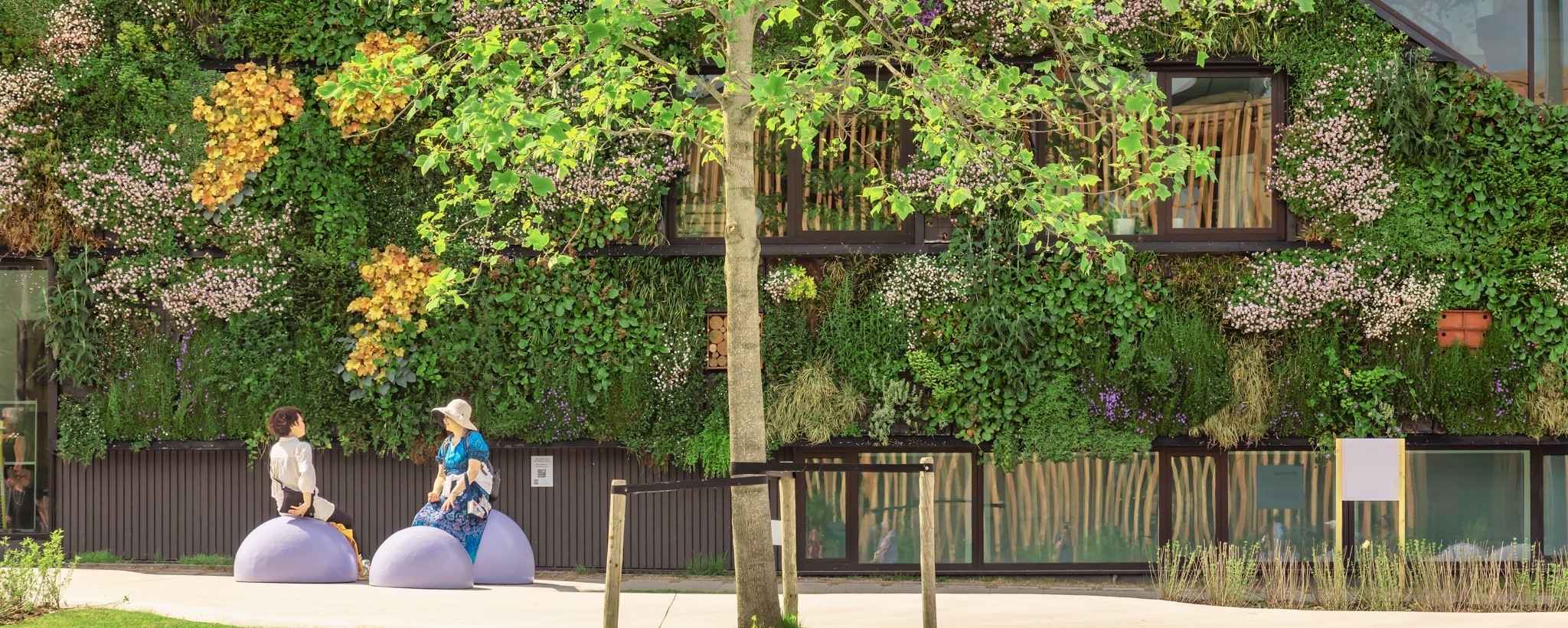
Greenery as a means, the city as an ecosystem
For us, greenery is not an end in itself, but a means of improving the quality of life for people, animals and plants. It reduces heat stress, increases water storage and contributes to a healthy living environment. We combine our professional knowledge of greenery in general with the impact of climate change on vegetation, the freshwater shortage that conflicts with greening, and developments in the field of basic quality of nature. In this way, we see greenery as a link in the ecosystem in our urban area.
The city as a 3D model and future profiles
We approach urban areas as a 3D environment in which above-ground and underground space come together. By combining ambitions in the areas of climate, energy, health and biodiversity in a GIS environment, we identify where greening has the greatest effect. This creates future profiles that provide insight into space claims and transitions.
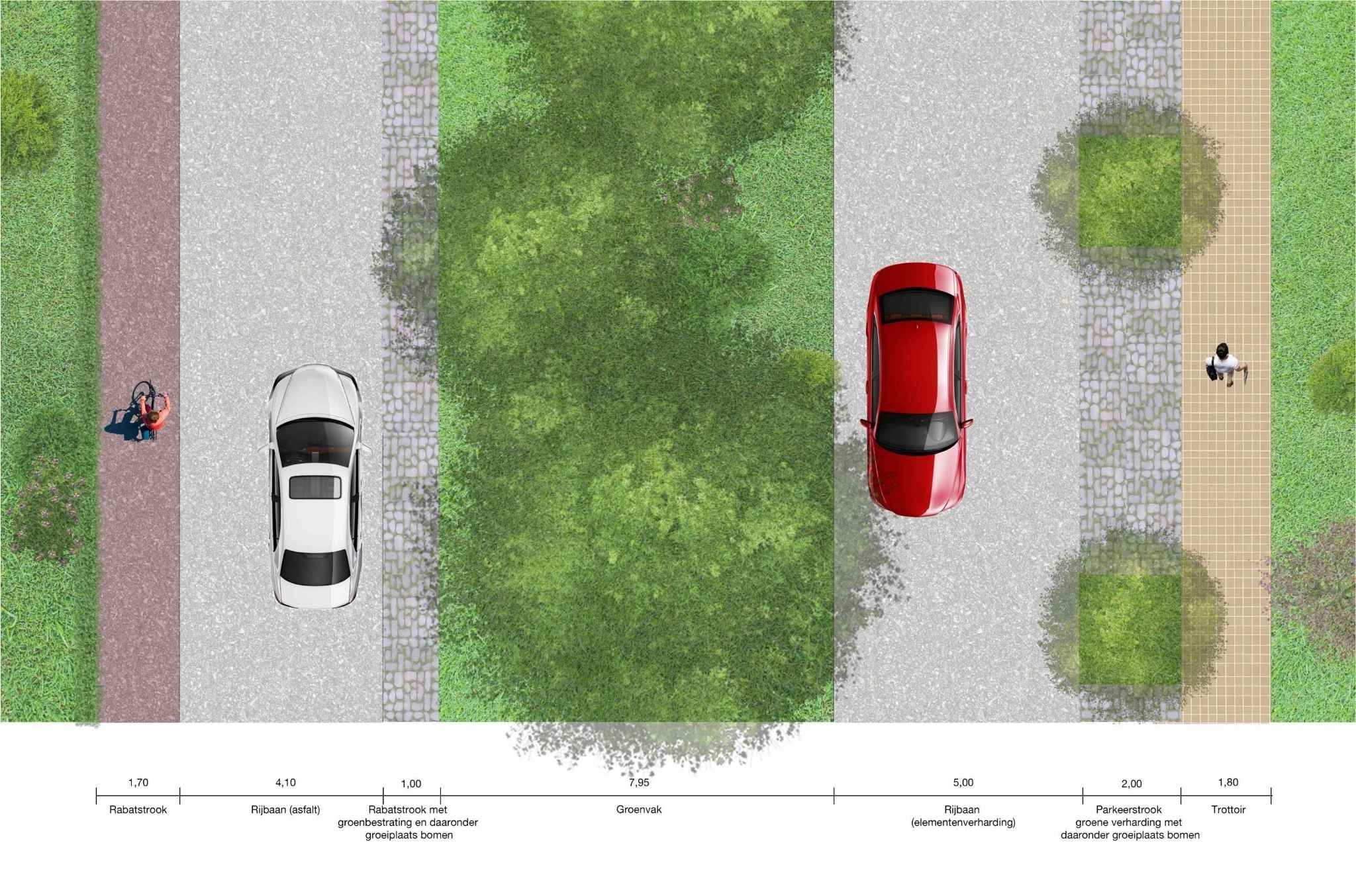
Our approach
Green is not a single task, but the connection between many tasks. Whether it concerns water, health, climate or biodiversity, green contributes broadly. At &flux, we translate vision into implementation, so that greening becomes structural and measurable.
Our expertise
To create impact with greenery, you need to know what greenery is, how to work with it and what is needed to put the right greenery in the right place. That is why we have greenery specialists who work on various greenery projects, such as:
- Tree policy and greenery policy in Baarn
- Greenery management and greenery asset management in Utrecht and Almere
- Modern felling policy linked to environmental factors in Baarn
- Monitoring and baseline measurement of greenery, Groen Groeit Mee (Greenery Grows With Us) and Amersfoort baseline measurement
The Nature Restoration Regulation
The European Nature Restoration Regulation (2024) is now in force. Although the national implementation is still being worked out, local authorities can already start preparing.
Through the GIOS network, in which we collaborate with VRO and LNV, we are closely monitoring developments.
Our approach to the regulation is that it is not just a tick box exercise, but an opportunity to accelerate the transition to a healthy, green living environment. We help local authorities to focus on monitoring green spaces, water and tree canopy cover, and we are helping to develop tools that will provide insight into progress even after 2030.
Basic Quality Nature
With the introduction of Basic Quality Nature, the focus is shifting from rare species to strong basic conditions for general biodiversity. This approach fits seamlessly with GIOS, in which green standards are linked to urban typologies.
We work together with provinces such as Overijssel and Drenthe, which already apply BKN within their policies. Within &flux, we contribute to the next version of the GIOS Guide, in which BKN will be further integrated. In this way, we help municipalities and provinces to develop an integrated, future-proof approach.
Data-driven
Data plays a major role in effective green policy. Using baseline measurements and GIS analyses, we identify areas where greening is promising and where there is urgent need. Our experts combine green expertise with data analysis to drive targeted greening. The Nature Restoration Ordinance requires insight into the quality and development of green spaces. That is why we help local authorities with monitoring, reporting and data management, as a basis for policy and implementation.


